Article Written by Anaka Wede, Art major
The invention of the camera is something that changed the course of history. From capturing moments in time to movies made of millions of photographs. But how did the camera come to be? How does it work? Most importantly, how does that reflect in our context on our college campus? Perhaps this is not a notion people think about when using their cellphones, social media, or watching tv. But the process of capturing images, like the ones we see every day, started with a thing called a camera obscura.
A Camera Obscura, a Latin word meaning “dark chamber”, is a phenomenon made capturable. It begins with a dark box with a small hole to let light from the outside through. The light rays penetrate the box, inverting before it hits the opposite wall. This light inversion translates the object outside the box to inside of it, creating the final image of the camera obscura. Dated all way back to the time of philosophers Aristotle and Mozi in the 5th and 4th centuries BCE, the Camera Obscura was an inteesting discovery. One of the first observances of it was during a solar eclipse when Aristotle saw light passing through a small hole in a leaf and saw an image of the eclipse on the ground. There were a lot of contributors recognized for the design of the first Camera Obscura, but one of the biggest was the famed artist Leonardo Da Vinci. As a tool that helped artists draw, the camera obscura allowed artists to trace lines of the object they wanted to capture making art more convenient and less time consuming.
The concept of the camera obscura began in the past, but the phenomenon stands the test of time and its history was brought to life here at NW. Last fall, our NWCore put on a campus event where students could take pictures in a Camera Obscura they created. Both students and faculty stood outside the box while someone from the inside took a photo of the images cast. In my discussion with Kali Jo Wacker, a professor on campus who was involved in the event, she said, “The whole point was to get them (students) into a new creative experience, and it was impromptu, so it also shows what people do in spontaneous environments”. This event provided community whilst incorporating the arts, sciences, and history into the experience, thus fulfilling the mission of the liberal arts that NW emphasizes. Not only that, but the invention of the Camera Obscura has allowed people to capture the image of God on paper as people truly are. It is also a reflection of the way our Creator has given us the ability to see and perceive others. The Camera Obscura works in a very similar way to our own eyes. Our pupils allow light waves into our eyes, where the rods and cones lie in the retina. Rods help us to see detail and in dimmer light, where cones allow us to see in color. The retina then sends the information it receives from the rods and cones to the optic nerve. Similarly to the Camera Obscura, these initial signals are read upside down. The image is not flipped until the optic nerve sends those signals to the occipital lobe in our brains. It is here where our brain flips the image and perceives the light as the images we see. The camera obscura is a picture of God’s own creation through us – as we create, we reflect Him. The camera obscura creates a beautiful new art medium, reflects God’s own creation of humanity, and moves people in ways that could have only been imagined hundreds of years ago.
The camera obscura reminds us that we need each other as people created in the image of a relational God. Through its collaboration of science, discussion, art, and engineering, people have created a beautiful thing that reflects our Creator’s handiwork. We cannot wait to see what the NWCore does next to involve our students in a new and spontaneous way!
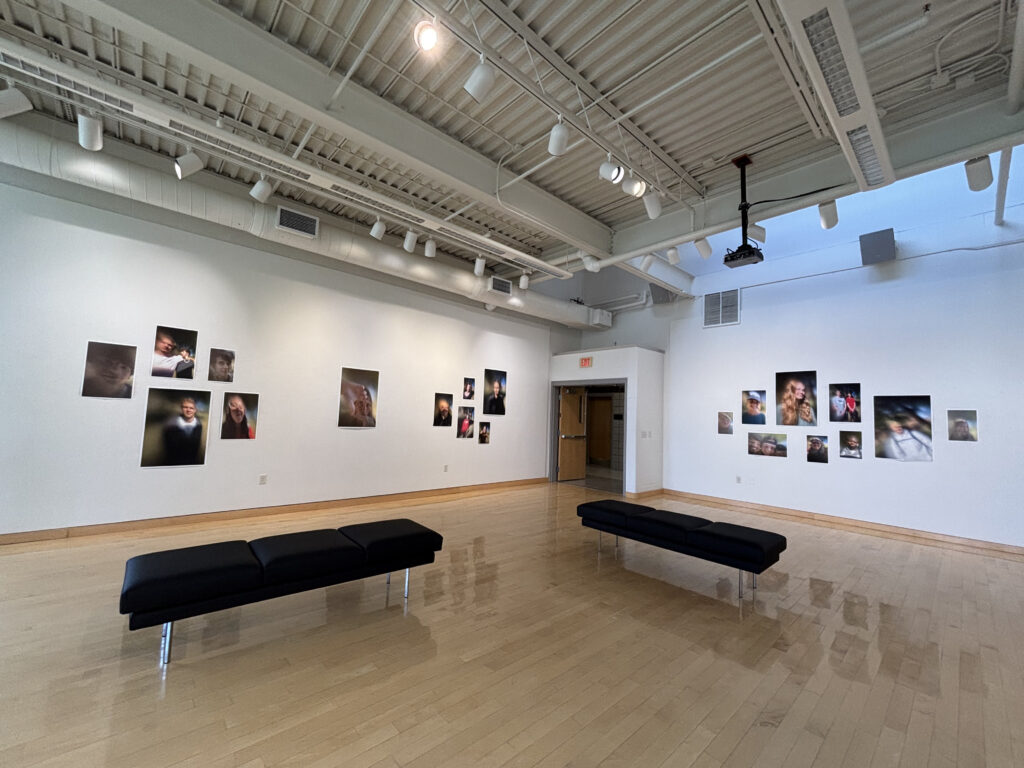
A display of Camera Obscura is up in the Korver Art Building.