In just a few short months, the entire country will be shooting off fireworks and grilling hamburgers and hot dogs to celebrate the 250th birthday of the United States of America. On the fourth of July, Americans collectively celebrate freedom and independence brought about by the end of the Revolutionary War.
What typically goes uncelebrated, however, is the work done by the founding fathers in the first form of government for the nation. Before, during and after the Revolutionary War was fought, the men whose faces are seen in history text books and oil paintings sat down and had many long, heated conversations on how America ought to be run. The names of these men can be found on documents, such as the Declaration of Independence, that are considered cornerstones of the nation’s government as it is today.
From the congressional and documentational history of the beginnings of the United States come laws, acts and declarations that have been studied and constantly reassessed by the United States government for years. While many of these laws have stayed a crucial part of the nation’s legislature, there are a significant pool of laws and regulations that have changed from the original view that the founding fathers had in their society to what the leaders of America throughout history had in mind for what America should be in modern society.
With these legislative changes come artistic interpretations on how the founding fathers viewed our nation, what they agreed on and disagreed on, and what has stood the test of time in the nation’s original legislature. One of the most famous modern artistic interpretations on the beginnings of the nation is Lin Manuel Miranda’s musical Hamilton, which showcases the beginnings of the country from the dramatized perspective of Alexander Hamilton put to hip-hop music. In the same category of American Revolution Musical, yet wildly different from the popular Broadway production, Peter Stone’s and Sherman Edwards’s musical 1776 focuses on the personal, political and legislative struggle of the founding fathers.
With its first premier on Broadway in 1969, 1776 features a large traditionally male heavy cast and a more classic style of music found in many famous musicals. In 1972, the musical was adapted into a film which kept the male heavy cast of founding fathers and adhered closely to the original Broadway production. On the surface, this musical may appear to be about a group of caucasian men sitting in a room and talking politics, as that was the society of the founding fathers. However when the musical came back to the stage in 2022, it was cast with modern society in mind. This 2022 production was cast using “blind” casting, a method in which directors cast actors based solely on ability without taking into account gender or race, and refreshed the script to be an enjoyable production for modern audiences.
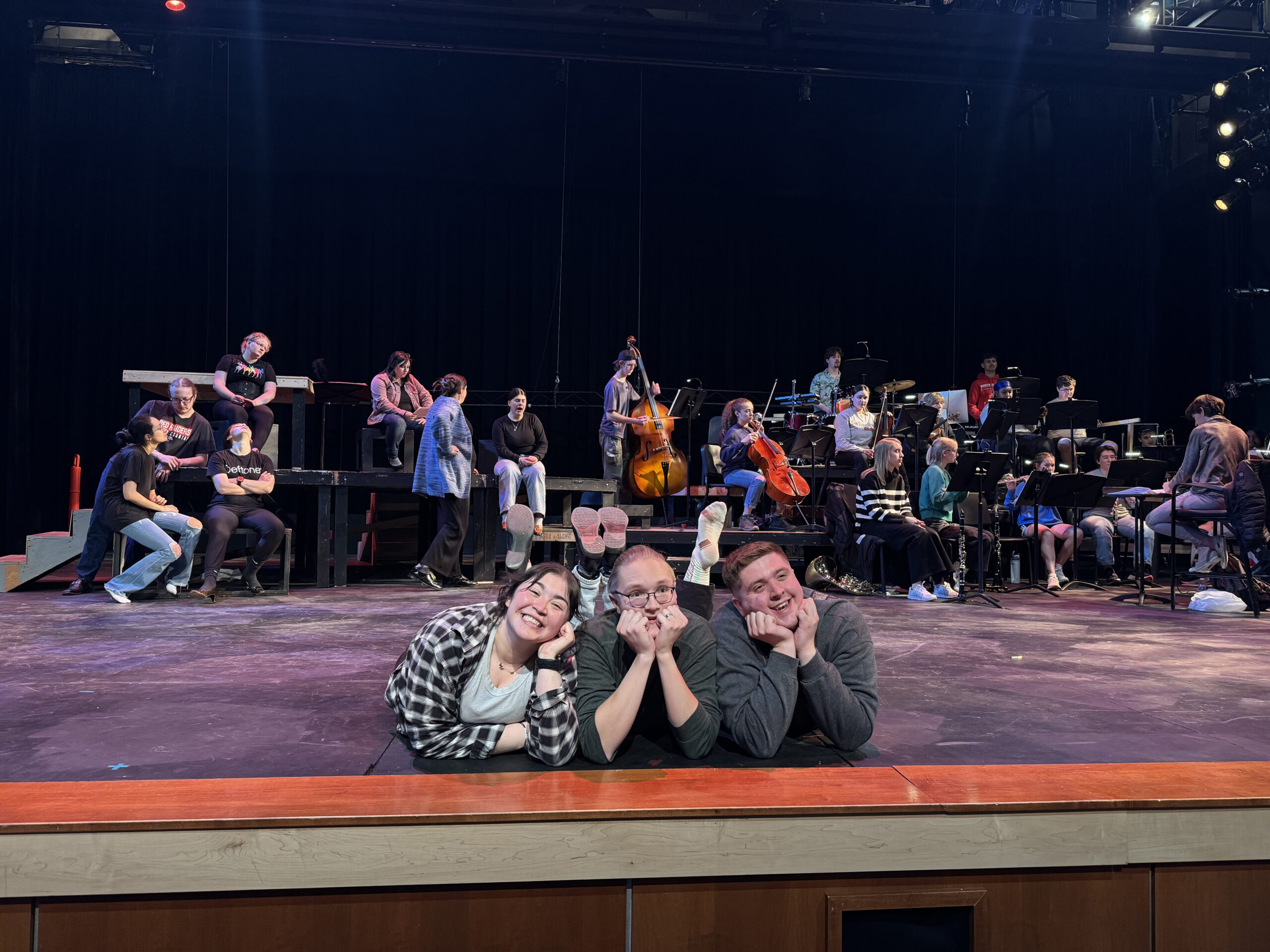
Today, in 2026, Northwestern is taking a similar approach to this historical musical. Interim professor and director of NW’s adaptation of 1776 Cornelia Hayes came into this production with a vision to not only tell the story of the founding fathers but also tell the story of our nation as it is today. During the 1700s, there was a clear division of power based on race and gender. Women, African Americans and other people of color did not yet have the right to vote, and yet 1776 is remembered and celebrated as a year of liberation and freedom for America. With this cause for celebration in mind, Hayes and the design team of 1776 sought to put this cry of liberty into choices made for this production.
Beyond the idea of blind casting, designers were given the direction of expressionism and abstraction.
“The bare bones were to be exposed of all that we did.” said sound designer, Rae Outland, “We wanted it to be raw, real and relatable. It is set in 1776, but interpreted in our 2026 minds, so our director wanted it to feel modern and timeless at some points.”
Paired with the design elements of the show is the collaboration of the music and theatre departments. As the production is a mainstage musical, the music department and theatre department have been working together as many orchestra members join the cast on stage to play the music of 1776 and help create the atmosphere of the show.
“Usually, we would stay in a literal pit below the stage.” said orchestra member Devon Miller “However, the director decided in collaboration with Dr. Angela Carlson, our music director, to bring the pit to the stage. This was to emulate a full congressional hall; instead of simply playing the music, we become a greater part of the story.”From the collaboration between music and theatre to the unique choices of the actors and designers, NW’s production of 1776 will be a memorable celebration of the history of America, from the Revolutionary War to today.