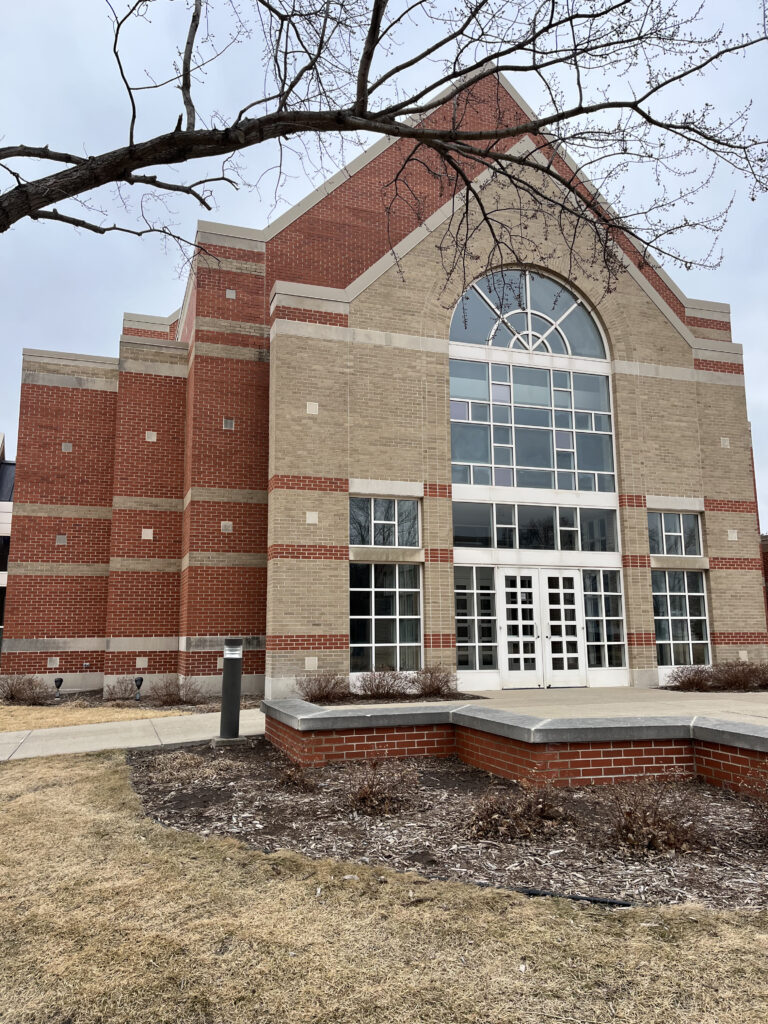
The Northwestern College chapel: an esteemed establishment of Christian Formation.
Starting on Jan. 23, Northwestern’s Friday chapels have featured several Professors speaking on the apocalyptic literature of the bible.
Each professor started their sermon with the same breakdown of what apocalyptic literature is, where it comes from and how it should be read.
According to those breakdowns, apocalyptic literature does not mean literature predicting the end of the world. Instead, apocalyptic literature means uncovering or revealing literature. It just so happens that, in the case of Revelation, the literature does contain uncovered truths about the end of the world.
Apocalyptic literature comes from times of crisis. This can be seen in the case of Daniel, where the narrative was spawned out of the hopelessness of being conquered by the Babylonians, or in Revelation with the Israelites being ruled over by the iron fist of Rome.
That is how apocalyptic literature should be read: as an encrypted message which when interpreted reveals a single truth with a multitude of meanings. The discussion of those multitudes of meanings are what the professors addressed in each of their respective sermons.
Prof. Williams kicked off the sermon series, entitled Apocalypse Now, by talking about Daniel. He brought attention to how the Babylonians destroyed Jerusalem, killing many of its people, razing their temple and exiling the people from their own land. He shared how the Babylonians took control through violence, and dehumanization, even stripping the people they conquered of their names, which glorified God, and replacing them with names which brought glory to the Babylonian king.
Williams also shared how God eventually brought his people out of this suffering, and provided instances for hope all the while. His examples were Daniel in the lion’s den as well as Shadrach, Meshach and Abednego’s salvation from the furnace.
Prof. Vonder Bruegge provided a deeper discussion of the what, where and how that each professor addressed, but took a particular focus on the message of Revelation: in the battle between human power and divine power, divine power will always take the victory. He continued on that point, claiming that in the face of injustice, God will step in to provide divine justice to the situation. He then added a challenge: “That’s good news if you are a persecuted child of God, but it’s bad news if you’re one of the persecutors. Which one are you?”
Prof. Lief drew upon three main ideas. The first idea was how what’s revealed in Revelation is a view of the Roman empire from God’s perspective: a beast that rises up from the sea to kill and destroy, rather than a beacon of wealth and wisdom.
The second idea Lief drew upon was Revelation as a reflection of Christ’s death and resurrection. He touched on how the world must be destroyed so that it may be remade into the kingdom of God; cleansed of all the sin and death rampant within it.
The final idea that Lief broached was best put in his own words: “God’s kingdom comes when Christians refuse to worship the false gods of economic and Cultural power…Our rulers are not gods. They are not our saviors. And political ideology is not the Gospel. God’s kingdom comes when we visit the sick and the imprisoned, and when we care for the poor and the vulnerable. At least, this is what Jesus says.”
The latest to speak in this series was Prof. Kaltwasser. She spent her time in front of the student body drilling down one point with several anecdotes. That point was that Revelation, and other Apocalyptic texts are not predictions of the future, but are instead warnings of constant deceptions.
Kaltwasser shared that in Revelation, John’s letters to the church were intended to help them take a step to the side, and see the truth behind the lies of the Roman empire. She also called us to read Revelation for that same purpose, using what it shows us about power, conquest, and their unwavering, corruptive nature to reveal the truth behind modern influences.
Prof. Andres will be the next installment of this series, sharing primarily on chapter 21 of Revelation.
relational bonds just from being here for three weeks. “At the end of the stay, they will share some reflections on their time at NWC, and I love hearing what they learned and enjoyed during their visit,” Anderson said.
Schaefer encourages NWC students to reach out to the WEP students to make them feel welcomed and loved. “Some advice when communicating to the WEP students is to talk slower and to enunciate your words. They know
English very well, but we Americans often blend our words together or use a lot of slang in conversations. If you take the time to get to know these students, you won’t regret it!”