Bob Dylan has always been one step ahead of the present. For more than sixty years, he’s stayed in motion shifting from folk to electric, from country, to traditional pop ballads. But his “Bootleg Series” has done the opposite: it slows time down, letting listeners look backward and see how those transformations actually happened. The newest installment, “The Bootleg Series Vol. 18: Through the Open Window (1956–1963)”, released in late October 2025, does exactly that. It’s a sprawling, fascinating deep dive into Dylan’s earliest years before the fame, before “Blowin’ in the Wind, before” Dylan was even his real name…
In the early tracks, you hear a teenager mimicking rock ’n’ roll, blues and folk, a voice that isn’t yet confident, a stage presence still forming. It’s often charmingly raw and occasionally uneven. But that’s the point: These are early steps, and hearing them side-by-side with the later material emphasizes how much change happens in just a few years. The compilation’s mid-section shows Dylan absorbing traditional folk songs, blues covers but also beginning to twist them into something new. You will hear the seeds of Dylan’s own songwriting style: the voice growing stronger, the phrasing sharper, the ambition clearer.
As the set moves into his Greenwich Village years, things get serious. Dylan’s style sharpens; his voice takes on that distinctive nasal edge. Early live versions of “House Carpenter” and “He Was a Friend of Mine” show him bridging the gap between traditional folk and his own emerging songwriting voice. There’s a sense of purpose here you can almost hear him realizing, in real time, that he’s meant to say something bigger.
By the time we reach disc two the final songs featuring his full 1963 Carnegie Hall concert Dylan has fully arrived. These performances of “A Hard Rain’s A-Gonna Fall,” “Don’t Think Twice, It’s All Right,” and “The Lonesome Death of Hattie Carroll” sound like dispatches from another era, yet they remain as urgent as ever. It’s astonishing to hear how much he grew in just a few short years. The Carnegie Hall recordings, in particular, feel like a graduation the moment he steps out from behind the folk tradition and into his own legend.
Still, “Through the Open Window” isn’t an easy listen from start to finish. It’s long, uneven, and occasionally rough around the edges. The earliest tracks sound like they were recorded in a garage because, in some cases, they probably were. But that’s part of the charm. This is Dylan stripped of mystique, working things out in public. For fans used to the polished brilliance of albums like “Highway 61 Revisited” or “Blood on the Tracks”, this collection shows how much trial and error came before the triumph.
Dylan’s creative restlessness feels timeless. He wasn’t born a legend; he built himself through constant experimentation and risk-taking. Hearing those first rough drafts and early performances is a reminder that every artist, no matter how great, starts out unsure.
“The Bootleg Series” has always been about uncovering hidden corners of Dylan’s career, but this volume feels different. It’s less about re-examining a famous era and more about discovering the origin story. The title, “Through the Open Window”, fits perfectly: you’re not looking back from a distance, you’re peeking in while it’s all happening.
If you’re a casual fan, the highlights edition will be more than enough; it gives you the essence without requiring an entire weekend to absorb. But for anyone who loves Dylan or cares about how creativity develops, the full set is a goldmine. It’s intimate, historical, and surprisingly inspiring.
In the end, “The Bootleg Series Vol. 18: Through the Open Window” isn’t just a treasure chest for longtime Dylan devotees. The album doesn’t try to romanticize Dylan’s youth; it lets the tape roll, flaws and all, showing the restless experimentation that would soon change modern music. For that reason, this release earns a solid four out of five stars not for polish or production, but for honesty. It captures the sound of becoming, and that’s a story worth hearing.
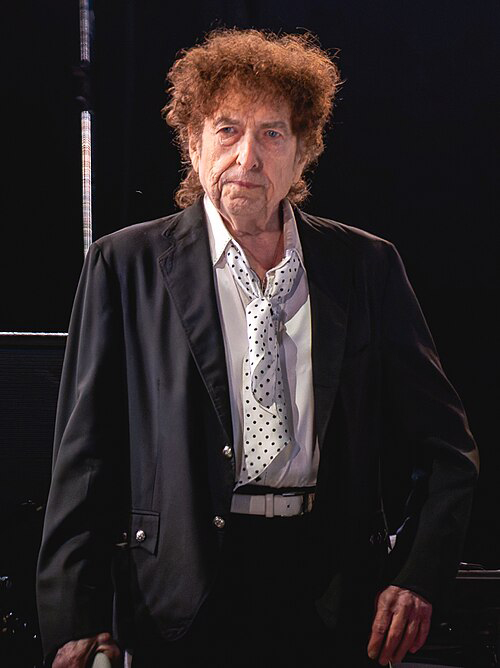
Bob Dylan.