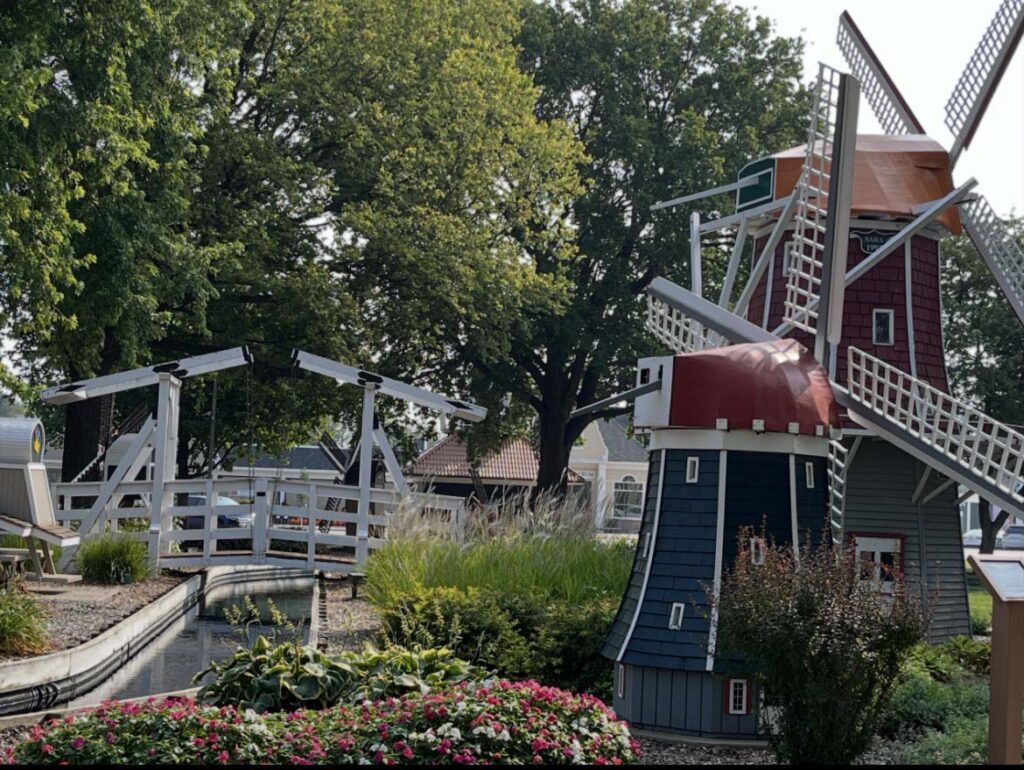
Living in a small Dutch town such as Orange City or Pella may not sound exciting, but there is a rich history surrounding towns like these. The traditions that have been around since the early 1900s are a testament of how important it is to respect those who came before us.
There are two Dutch major towns in Iowa: Orange City and Pella. Pella was the first town to appear on the map when it was founded in 1947. Led by Reverend Hendrick Pieter Scholte, Dutch immigrants seeking religious freedom from the Netherlands settled in Marion County. The name of the town comes from a biblical city of refuge. From its beginning, the town has grown rapidly as a center for Dutch culture.
Orange city is a direct ‘daughter’ of Pella that started when settlers led by Henry Hospers, traveled from Pella to Sioux County to establish a new colony, seeking cheaper and more abundant farmland for the next generation. The town was named in honor of the Dutch Royal House of Orange. The settlers faced early challenges due to the severe grasshopper plagues that devastated their crops, but the community persisted while also gaining support from Pella.
Both towns have their own motto depicting why it was founded. For Pella, it reads “In God our Hope and Refuge,” which was chosen by Scholte to reflect their religious journey. To the rest of the world, Pella is often referenced as “America’s Dutch Treasure.”
Orange City often highlights the motto “Je maintiendrai” which translates to “I shall persevere,” and is featured on the coat of arms of the House of Orange. The town’s slogan is depicted as “Color your life vibrant” and “Discover the Dutch.” Some recent rebranding has changed it to “Move Small. Live Big.”
One of the most well known traditions of the two Dutch towns is their annual Tulip Time festival which started in 1935 and takes place during the first full weekend in May. The two tulip festivals are similar in nature, but have slightly different traditions. For Pella, some of the highlights are daily street scrubbing, Dutch dancing, evening parades with lit-up floats, authentic Dutch foods, tours of the Pella Historical Museums, the Vermeer Windmill and the Glockenspiel and thousands of vibrant tulips that bloom throughout the city, especially in Central park, Sunken Gardens, and near the public library. The visitpellaia Instagram page wrote the following on Monday Apr 13:
“Happy Monday! Here’s another tulip update as of 8:30 this morning. We are expecting warmer weather this week that will help the remainder of beds continue to grow and start showing color.”
Even if it seems a little quirky, tulips are something that brings the community together and creates great pictures.
The Orange City Tulip Festival has similar element and is held annually in mid-May, a couple weeks after Pella. Key highlights include the traditional street scrubbing, nightly musical theatre, Dutch dancing, various ethnic delicacies, thousands of tulips, views of over a dozen replica windmills, wooden shoe carving, carnival rides and the Fietzen Zangers, a group of singers on bicycles who perform Dutch songs throughout the downtown area.
Living in a Dutch town is different than living in a big city or other North American suburbs. Some distinct features include human-scale urbanism, high-density planning and an intense focus on biking and walking over cars. Dutch neighborhoods are designed around people, featuring a higher density of 12,950 to 25,900 people per square mile. This ensures amenities like schools and shops are within walking or biking distance from most homes. While often possessing a historic ‘old-town’ center, new developments still focus on creating dense, functional areas that mix residential with essential services, rather than segregated residential zoning.
To be more specific with American Dutch towns, these towns are distinct because they are designed as ‘living museums’ or themed communities that preserve 19th century Dutch culture. They often replicate European styles with brick, narrow facades and windmill and tulip focused landscaping. Many of the towns embrace their heritage to boost tourism, sometimes adding thematic elements that are more traditional than what is found in modern, industrial Netherlands. There is also often a community structure around churches, since many Dutch immigrants came here to seek religious freedom.
Pella is home to over 20 churches that hosts numerous denominations including Reformed,, Baptist, Methodist, Catholic, and other Protestant congregations. Orange City is home to at least 10-15 distinct churches in the immediate town area, and they represent denominations such as Reformed Church of America, Baptist, Lutheran, and Evangelical Free.
A couple of Northwestern students come from Pella, and here’s what they have to say about living in a Dutch town.
“Coming from one Dutch town to the other, it is interesting to see where the similarities and differences are.” One student said “Although they have similar beliefs and traditions, Orange City is a lot quieter than Pella. Maybe it’s because it’s half the size and people have more opportunities to run into people they know and strike up a conversation.”
General values of the two towns include integrity and people, innovation and passion, community growth, quality of life, faith and education, a strong work ethic, care for the community and of course, Dutch heritage and tradition. To outsiders, it may seem that there are so many tight-knit elements that secluded from the rest of the world, but in contrast that is one thing that makes it such a great community to live around.